
Chinese catering brands accelerate global expansion, with categories like hot pot and new tea drinks gaining popularity overseas. Exploring localized supply chains and cultural integration, seizing policy dividends and market opportunities, opening a new chapter in the overseas expansion of Chinese cuisine.
Bubbling hot pots, sweet milk teas, and chewy hand-pulled noodles... these distinctive Chinese culinary delights have become deeply integrated into the daily lives of overseas consumers. Currently, China's catering industry stands at a pivotal point of both large-scale expansion and value reconstruction. On one hand, the industry continues to grow in size; on the other, market competition has intensified significantly. Catering enterprises with established capabilities are accelerating their overseas expansion, centered on a core strategy of "breaking cultural barriers, establishing standards, and prioritizing supply chain development." This marks a new stage for the internationalization of Chinese cuisine.
Chinese catering brands are taking to the world stage at an unprecedented pace. From early single-store trials and cultural exports to systematic, large-scale global layouts, the "going global" movement of Chinese catering has entered a new phase. This transformation is not only an inevitable trend in the development of China's catering industry but also a strategic choice to align with the times and seize global opportunities.
As competition in the domestic catering market intensifies, overseas expansion has become an essential path for leading brands seeking growth. The release of policy dividends has injected strong momentum into this trend. In March 2024, the "Guiding Opinions on Promoting the High-Quality Development of the Catering Industry," issued by the Ministry of Commerce and other departments, explicitly proposed to accelerate the "going out" of Chinese cuisine and support catering entities in actively exploring overseas markets.
While the wave of Chinese catering brands going abroad is surging, this "globalization on the tip of the tongue" is not merely about store expansion. Behind it lies a deep interplay of supply chain localization and cultural integration.
Seizing the Opportunity
The international journey of Chinese cuisine is long-established. Early Chinese immigrants brought their culinary traditions to all corners of the world. After the Reform and Opening-up, renowned enterprises like Quanjude and Donglaishun ventured abroad. Today, the range of catering categories going global is richer and more diverse, with new-style tea drinks, hot pot, regional cuisines, and specialty snacks gaining popularity overseas.
The hot pot category has been a pioneer in the overseas expansion of Chinese catering brands, showing a trend of diversified development. Haidilao International Holding Ltd. has opened over 120 stores globally. Hot pot enterprises like Xiabuxiabu Catering Management (China) Holdings Co., Ltd. and Chengdu Zhuguangyu Catering Management Co., Ltd. are focusing on the Southeast Asian market, creating a competitive edge with bar-style small hot pots and a marketplace-style ambiance.
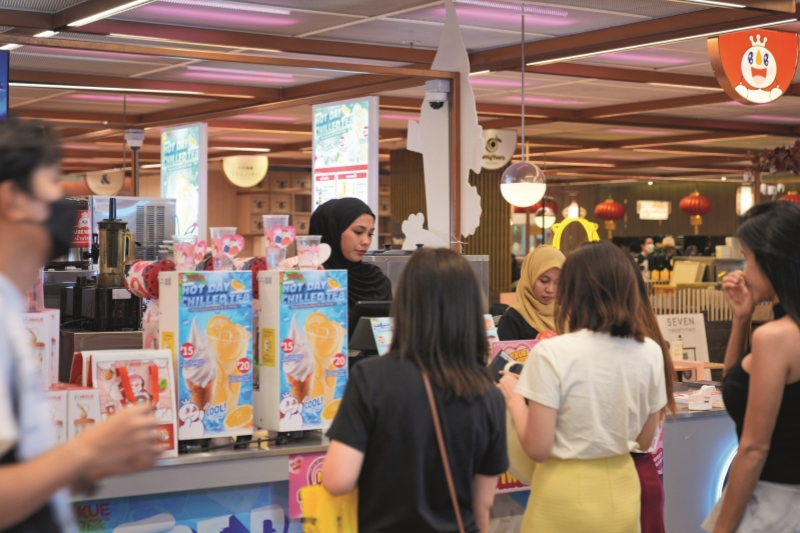
The freshly made beverage sector has become a new force in global expansion, with rapid overseas store growth. Mixue Bingcheng has been actively expanding overseas since 2018 and now operates over 5,000 stores in 12 countries, including Thailand, Vietnam, Indonesia, Singapore, South Korea, Australia, and Japan. Other new-style tea brands like Heytea, Nayuki, Aunty Shanghain, and Chagee are also accelerating their overseas store openings. Notably, Heytea's store in New York's Times Square has become a popular local landmark with its unique decor and specialty products.
In recent years, the overseas expansion of Chinese catering enterprises has entered a new period of rapid development. The "2024 Development Report on Chinese Catering Going Overseas" shows that as of September 2024, the number of Chinese catering stores overseas has reached nearly 700,000, with a market size approaching 3 trillion RMB. Driven by the resonance of supply and demand, the overseas Chinese cuisine market presents a "new blue ocean."
Why the Frequent Moves in Chinese Catering's Overseas Expansion?
Fierce competition in the domestic market is a major driver for enterprises to expand abroad. According to data from relevant agencies, in the first half of 2024, 1.347 million new catering-related enterprises were registered in China, while 1.056 million were deregistered or had their licenses revoked, a figure close to the total for the entire year of 2023 (1.359 million), reflecting the white-hot state of industry competition.
Zhu Danpeng, Vice President of the Guangdong Food Safety Promotion Association, told reporters: "After years of rapid development, the domestic catering market has entered a stage of stock competition. For leading brands to achieve sustained growth, they must find new growth points. 'Going global' is an effective way to expand their business footprint and enhance their international brand influence."
The wave of Chinese chain catering brands expanding overseas is driven by the dual forces of policy support and market demand. From a policy perspective, relevant departments have introduced a series of measures to support the international development of the catering industry in recent years. Furthermore, the Belt and Road Initiative has provided significant opportunities for Chinese catering to go global.
From the perspective of global consumer demand, Chinese cuisine has broad development prospects in overseas markets. Chen Liteng, a digital life analyst at the E-commerce Research Center of 100EC.CN, stated: "Current market demand is showing structural changes, bringing opportunities for the overseas development of Chinese catering. Firstly, the overseas Chinese population has continued to grow over the past decade, forming stable consumption circles for Chinese food in Southeast Asia and North America. Secondly, with the global trend of consumption upgrading in the catering industry, the cultural experience value of Chinese cuisine is being re-recognized. Thirdly, domestic catering supply chain companies are drawing on international experience to create a flexible 'central kitchen + localized procurement' model, providing strong support for the overseas expansion of Chinese catering."
Addressing the Challenges
For years, the challenges facing Chinese cuisine's global expansion have remained consistent, primarily revolving around consumption habit conflicts arising from cultural differences, supply chain construction and cost pressures, and policy and compliance barriers. The international journey of Chinese catering brands is an expedition of breaking through barriers.
When Chinese flavors meet foreign cultures, overcoming the "palate gap" is the first hurdle for brands going abroad. A representative from Haidilao admitted that localization exploration is key to deeply understanding the needs of local customers. To this end, they continuously innovate soup bases and specialty dishes for different regions, such as launching a "Spicy Milk Hot Pot where you drink the soup first" in Southeast Asia, improving "Masala Chicken" with Middle Eastern spices in the UAE, and introducing a Satay soup base in Malacca. These regional innovations not only preserve their core identity but also draw inspiration from local tastes, allowing their products to integrate into the local cultural fabric.
Li Yongzhou, a specially invited Vice President of the China Hospitality Association, stated that the internationalization of Chinese catering is no easy feat; it requires profound cultural heritage and unwavering determination. To ensure the sustained prosperity of Chinese cuisine on the international stage, it is essential to deeply understand and strengthen its cultural foundations, enhance organizational capabilities, and improve adaptability to local societies.
"Breaking cultural barriers" is the core challenge for brands going global. Shanghai Yangguofu Enterprise Management (Group) Co., Ltd. understands this well: Chinese cuisine is a cultural symbol, and its overseas stores are not just dining spaces but also stations for spreading Chinese culture. In the European market, they have planned a series of activities, such as lacquered fan making and calligraphy experiences in their stores, integrating the beauty of Eastern art into the brand's culture. Design details like herbal walls and phoenix walls immerse customers in a rich Eastern artistic conception from the moment they step in.
If cultural differences are a soft challenge, then supply chain construction is a tangible "hard nut to crack." "The primary issue in 'going global' is the supply of raw materials," an industry insider pointed out the core pain point. The common practice today is to export core ingredients from China, supplemented by small-scale local procurement, but this is far from a smooth path.
Wang Jie, a founding partner of Lemon季 (Ning Ji), told reporters: "In our domestic stores, the system and supply chain are integrated. When the front-end consumes raw materials, the back-end automatically places an order. In the United States, however, the front-end and back-end systems are separate, relying mainly on the store manager to place orders manually. If the business volume is not large enough, third-party supply chain, warehousing, and logistics systems will not integrate with ours."
In the view of Zhou Pengbang, Deputy Secretary-General of the Global Food Supply Chain Alliance in Singapore, there are business opportunities in the globalization of the supply chain. Catering supply chain companies need to have strategic plans for international development, focusing on supply chain collaboration and innovation.
Reporters have learned that the supply chain certification systems in some countries are complex and stringent. They not only require a certificate but may also commission international agencies to conduct on-site factory inspections in China, a process that is tedious, time-consuming, and costly. Thailand even requires all food ingredients to be produced locally, forcing tea and coffee brands wishing to expand overseas to build their own factories.
In some countries with complex geography and underdeveloped logistics systems, issues like low cold-chain penetration and slow delivery times make the stable supply of fresh ingredients highly uncertain. Weng Yongjun, founder of Shanghai Yongfu Catering Management Co., Ltd., said: "In Singapore, 80% of our ingredients need to be air-freighted from China." Local agricultural products in Singapore are scarce and often fail to meet the brand's standards, making high air freight costs a necessary price to pay for maintaining quality.
For formats like new-style tea drinks, supply chain challenges persist throughout the entire process of going global. From cross-border transportation of raw materials, international warehousing, and equipment procurement to overseas store decoration, implementation of localization strategies, and the construction of supply chains for special ingredients like dairy products—all are critical factors determining the success or failure of an enterprise's overseas expansion.
Inconsistent policies, regulations, and standards across different countries pose another challenge for catering brands going global. Reporters have learned that in areas such as food imports, formula approvals, and health inspections, the laws and regulations of some countries create high entry barriers for overseas enterprises. For example, Singapore prohibits the sale of blood products, and Australia has a very strict quarantine system, significantly raising the compliance threshold for supply chains. Additionally, food safety standards and warehousing requirements vary from country to country, requiring companies to conduct in-depth regulatory research before entering a new market.
Li Yingbo, Chief Strategy Officer of Cotti Coffee (Beijing) Co., Ltd., stated that brands must conduct a comprehensive assessment before entering any market. Factors ranging from market prospects and maturity, food culture, and consumer habits to supply chain construction, product R&D, pricing, and marketing strategies are all critically important.
In the view of Chen Jingjing, founder of JINGJIE Brand Consulting, building a brand from scratch in an overseas market requires a substantial investment of resources and energy. The overseas expansion of Chinese catering is not just about replicating successful experiences; enterprises must have the courage to "re-start" from zero.
Liu Jingjing, Chairman of Beijing Jiahe Yipin Enterprise Management Co., Ltd., believes that successful overseas expansion always belongs to the pragmatic and diligent pioneers. Enterprises themselves must prudently assess their preparedness before going abroad. Building on a solid foundation in the domestic market, they must prioritize the development of supply chain capabilities, international talent, and knowledge of relevant national laws.
Ecosystem Construction
Moving from "unacclimatized" to "local symbiosis" is a systemic project that requires wise government guidance, deep enterprise integration, and collaboration across the entire industrial chain. The path to breaking through these challenges is gradually becoming clearer through exploration.
Relevant departments and industry experts are focusing on resolving these bottlenecks. The China Chain Store & Franchise Association has established an Overseas Expansion Working Committee, aiming to help enterprises overcome cultural, legal, and supply chain barriers in overseas markets by building bridges between government and businesses and providing professional service support. Michael Hong, Executive Director and CEO of Hop Hing Group Holdings Limited, suggested establishing a Chinese Cuisine International Promotion Office to coordinate the international development of Chinese food and promote the creation of "Chinese Cuisine + Culture" intellectual properties. Some industry insiders have called for the establishment of special support funds to focus on supporting enterprises in overseas brand building, supply chain construction, and localized R&D, and to provide loan interest subsidies and risk compensation for small and medium-sized catering enterprises.
Yan Qi, Chairman of Chongqing Taoranju Catering Culture (Group) Co., Ltd., suggested investing in and constructing overseas catering cultural industrial parks to encourage catering enterprises to invest collectively. The initial construction could be a joint investment by the government and enterprises, or funded by industry associations with the government providing "one-stop" services, various forms of business guidance, and image promotion. Subsequent operations could be managed by the industry associations.
Meanwhile, industry-level collaboration and the wave of digitalization are becoming key drivers for breaking through these barriers. Zhang Junjie, founder of Chagee, stated that the overseas expansion of a single brand, channel, or link is unlikely to succeed. True brand internationalization must be a "collaborative expansion of the entire ecosystem, including supply chain, logistics, decoration, design, dairy products, and the whole industrial chain." Only by building a complete ecosystem can scale effects be achieved, ensuring stable back-end supply and effectively supporting front-end market expansion.
A stable supply chain is the cornerstone of a successful overseas expansion for catering brands, and many are actively developing standardized, modern supply chains. The supply chain system of Haidilao's overseas business, Super Hi International, is centered on regional central kitchens, combining local procurement with international distribution to reduce costs, shorten supply cycles, and ensure the quality and consistent taste of key ingredients. Shanghai Bantianyao Catering Management Co., Ltd. has established stable cooperative relationships with several leading brand suppliers to reduce procurement risks and conducts large-scale procurement through professional supply chain systems to enhance its bargaining power and lower operational costs.
New-style tea brands are solving supply chain problems in innovative ways. Jasmin Pecco aims for "local symbiosis" by actively cooperating with overseas suppliers to ensure stable raw material quality and a flexible, efficient supply chain that can respond agilely to market changes. Lemon季 (Ning Ji) is exploring new models for overseas supply chain construction, such as developing its own concentrated lemon juice to solve the supply of core materials. Heytea is also actively investing in its overseas supply chain capabilities, having established warehouses in the UK, Malaysia, South Korea, Singapore, and other locations to provide storage and logistics services for its stores. Chabaidao has adopted a "cross-border + local" strategy, sourcing fresh milk and fruit locally while relying on cross-border transport for packaging materials, frozen goods, and core raw ingredients.
E-commerce platforms are using technology to accelerate the internationalization of Chinese cuisine. Meituan's "Black Pearl Restaurant Guide" went overseas for the first time this year. Wei Wei, Vice President of Meituan and General Manager of the In-Store Dining Business Unit, said: "Meituan plans to release an AI agent service for the global catering market, promoting culinary cultural exchange through international rankings, enhancing the overall level of intelligence in both Chinese and foreign catering markets, and providing important data support and marketing platforms for brands going abroad."
From exploring overseas markets to feeding back into brand innovation, the internationalization of Chinese cuisine is forming a virtuous cycle of mutual empowerment. Tang Tang, head of international business at Genki Forest (Beijing) Food Technology Group Co., Ltd., has a deep understanding of this: "Participating in global competition has pushed us to adhere to higher health standards, better understand the overseas beverage market, and accumulate experience in beverage internationalization. These experiences, in turn, force us to upgrade our processes, ultimately driving industry progress." Cotti Coffee also found that its localization explorations in overseas markets offer valuable lessons for innovation in the domestic market. This closed loop of "going abroad - learning - feeding back" allows Chinese catering to achieve self-evolution through globalization.
In Chen Jingjing's view, for Chinese catering to truly connect with consumers and achieve localization, it needs to move from taste adaptation to cultural co-creation. The underlying logic of a brand is cultural connection. Consumers are not just payers but also experiencers of Chinese culture and co-creators of the brand story. By turning the dining experience into a memorable, high-frequency emotional connection, cultural trends can be transformed into business growth.
Looking at the journey of Chinese catering's overseas expansion, the path forward is becoming increasingly clear: this is not a simple market expansion but a systemic project guided by policy mechanisms, supported by full-chain industry collaboration, and rooted in deep enterprise localization. From Yangguofu using Eastern artistic concepts to convey culture, to Haidilao delivering warmth through localized services, from Chagee's full-chain industrial layout, to Meituan's technological empowerment, Chinese catering is exploring diverse paths of symbiosis.
As the resilient supply chain network matures and sincere interactions and shared delicacies gradually dissolve cultural barriers, Chinese catering brands will ultimately complete the transformation from "unacclimatized" to "local symbiosis." Going global is by no means the end of the journey, but rather an essential path for Chinese catering brands to forge themselves into global enterprises.