
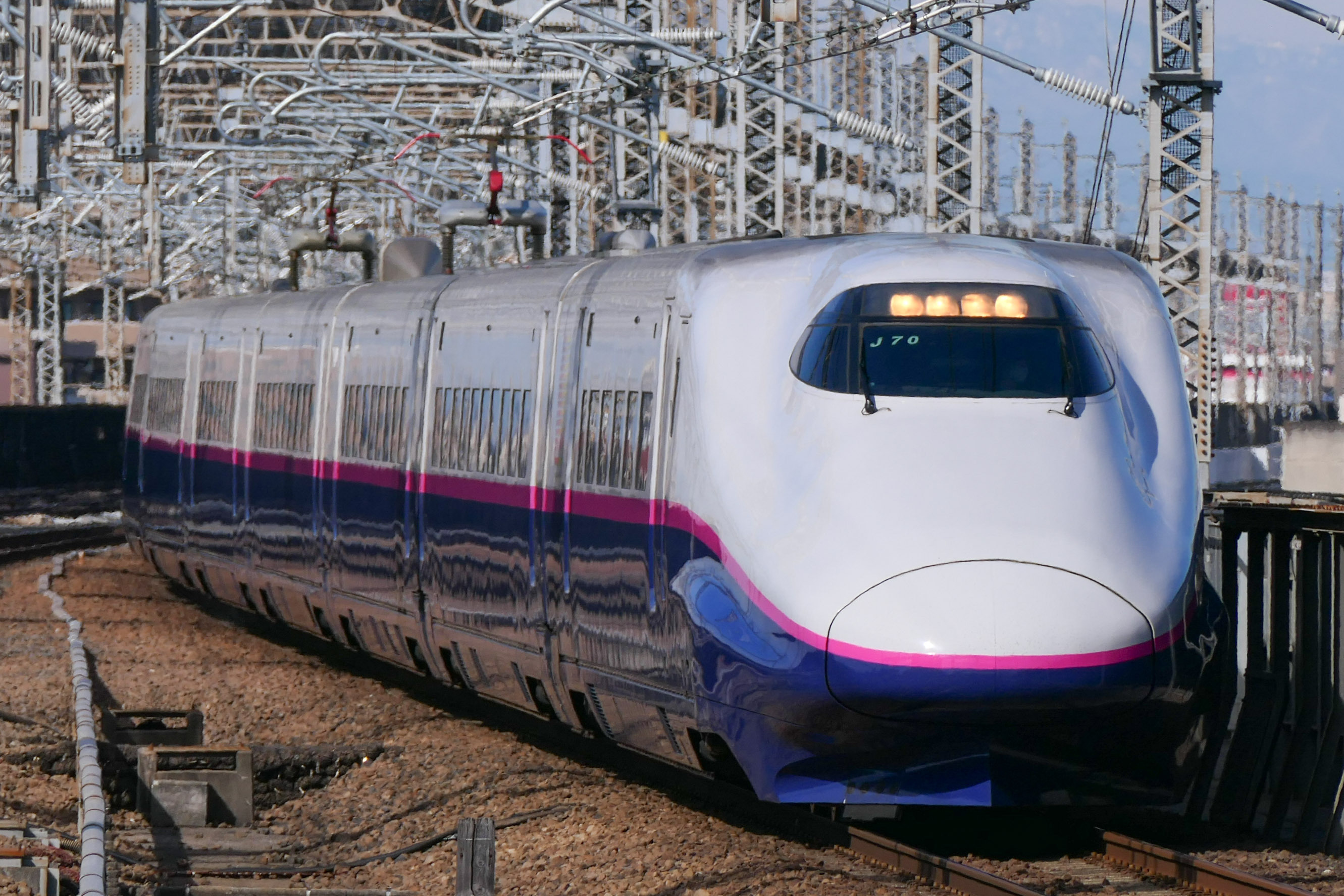
Japan's Shinkansen to enter the Indian market, Mumbai-Ahmedabad high-speed rail to open in 2030. Japan and India strengthen cooperation in semiconductors, high-speed rail, and other fields to jointly address US tariff pressures.
Under the heavy tariff pressure from the U.S., is Japan seeking closer ties with India?
On August 31, Japan and India confirmed that India's first high-speed rail project, the Mumbai-Ahmedabad High-Speed Rail, will introduce the 'E10 Series' Shinkansen trains, currently under development by East Japan Railway Company (JR East) and expected to operate in India by 2030. Both sides also announced the launch of training programs for drivers and related personnel to prepare for future operations.
Earlier, Indian Prime Minister Narendra Modi completed his visit to Japan. During the visit, the two sides agreed to cooperate in various economic and trade fields, including semiconductors, critical minerals, and high-speed rail. Japan pledged to invest approximately $68 billion (about 10 trillion yen) in India over the next decade. Additionally, the collaboration includes Japan's plan to bring in 50,000 Indian technical professionals to work in Japan to address domestic labor shortages.
In recent years, trade between Japan and India has grown significantly, with direct investment also increasing markedly. Bilateral trade reached $25.2 billion in 2024. However, as Japan and India deepen their economic cooperation, both countries currently face tariff pressures from the Trump administration in the U.S.
Progress on India's First High-Speed Rail
During the late August summit between Japan and India, the two sides reached the 'Japan-India Economic Security Initiative,' ensuring the supply of critical materials and cooperation in key technologies, focusing on semiconductors, critical minerals, pharmaceuticals, clean energy, and information and communications. Additionally, Japan and India revised the 'Joint Statement on Security Cooperation,' explicitly including economic security, joint development of defense equipment, and technological management in emerging areas like cyberspace and space.
The joint statement from the summit also mentioned high-speed rail cooperation as a 'flagship project.' Under the 'E10 Series' Shinkansen agreement between India and Japan, the trains will be produced by Hitachi and Kawasaki Heavy Industries. India plans to purchase 10 sets of 24-car trains, with some to be manufactured domestically under India's industrial promotion policies.
Previously, Japan and India had also advanced India's first high-speed rail project, connecting the western cities of Ahmedabad and Mumbai over approximately 500 kilometers, with a travel time of about 2 hours. However, this project, which began in 2017 and was slated to open in 2023, has faced multiple delays.
Despite new progress on India's first high-speed rail, disagreements remain between Indian and Japanese engineers on several aspects. For example, Japan insists on using cable technology for the signaling system, similar to the Shinkansen. However, India's National High-Speed Rail Corporation recently awarded a 7-year contract to a domestic joint venture to provide an interim signaling system. Former Indian Railways official Sudhanshu Mani noted, 'This means the Mumbai-Ahmedabad line will operate with a parallel signaling system, which will increase costs.'
During his visit, Modi also toured a factory of Tokyo Electron, Japan's largest chip equipment manufacturer, in Miyagi Prefecture. Tokyo Electron plans to establish a team of chip engineers in India by 2026 to support Modi's domestic semiconductor manufacturing initiative.
Currently, the Indian government is actively attracting international chip manufacturers to set up operations in India, offering incentives to narrow the technological gap with advanced economies. Under the plan, Tokyo Electron will provide technical services to Tata Electronics and conduct training via remote and on-site support from Japan.
Both Facing U.S. Tariff Pressure
Behind the closer ties between India and Japan, both countries have recently faced challenges with U.S. tariffs.
For Japan, during Modi's visit, Japan's Minister of Economic Revitalization, Akira Amari, canceled his planned trip to the U.S. from August 28 to 30. According to reports, this was due to unresolved issues in tariff negotiations with the U.S. It remains unclear whether Amari will reschedule the visit.
On July 22, the U.S. and Japan reached a trade agreement, setting Japan's so-called 'reciprocal tariff' rate at 15%. The new U.S. tariff rates took effect on August 7. Japanese Prime Minister Yoshihide Suga stated that the U.S. had previously promised not to impose additional tariffs on Japanese goods already taxed at 15% or higher, while raising rates for goods below 15% to 15%, but the U.S. failed to implement this. Japan has demanded corrections.
Currently, the Japanese and U.S. governments are discussing the simultaneous release of special measures to reduce Japan's 'reciprocal tariff' burden, a presidential order to lower auto tariffs, and a joint document on $550 billion in U.S. investments. According to Japanese government sources, the joint document is already being drafted. Both sides will finalize details, including specific investment approaches and profit-sharing ideas.
For India, as reported by Xinhua, the U.S. imposed a 25% punitive tariff on Indian goods on August 27, citing India's imports of Russian oil. This brings the total U.S. tariffs on Indian products to as high as 50%.
Capital Economics warned that U.S. tariffs could reduce India's economic growth by 0.8 percentage points this year and next. In response, the Indian government pledged financial aid to affected businesses, including increased loan subsidies and support for industrial diversification. India will also boost exports to nearly 50 countries and regions, particularly in textiles, processed foods, leather goods, and seafood.
(This article is from Yicai.)