
Brazil leads the development of Latin American trade and economy, with deepening Sino-Brazilian trade relations. Explore Brazil's advantages as the largest trading nation in South America, the expansion plans of the Port of Santos, and new opportunities for bilateral cooperation.
Brazil's economy is thriving, wielding significant influence in Latin America and playing a pivotal role in regional international trade. Moreover, Brazil boasts vast, high-yield agricultural land, making it a major global exporter of agricultural products. Simultaneously, the country has a large population with a per capita income reaching a medium level, constituting the largest consumer market in the region. These economic factors collectively position Brazil as the largest trading nation in South America.
Relations between Brazil and China are growing increasingly close. To support the sustained growth of bilateral trade between the two countries, Brazil needs to expand its logistics industry capacity. 2024 marks the 50th anniversary of diplomatic relations between Brazil and China, during which the two nations signed 37 bilateral agreements, reflecting their commitment to strengthening economic ties and cooperation across various sectors, including trade, investment, agriculture, industry, energy, mining, and finance. Given the tense geopolitical situation between China and the U.S., China is actively seeking to diversify its trade partnerships to mitigate supply chain disruptions and expand its market in Latin America.
To foster trade development, it is essential to enhance logistics capabilities, making bilateral industrial supply chains more stable and resilient. Brazil's largest port, the Port of Santos, is implementing a series of optimization measures, including port expansion, infrastructure upgrades, and the adoption of advanced technologies to improve operational efficiency, thereby increasing its capacity to handle more international imports and exports.
The HKTDC Research team recently conducted a field study in Brazil to understand the country's international trade landscape and characteristics. Through interviews with local businesses and the management of the Port of Santos, the team gathered first-hand information on the port's latest developments.
A Strategic and Reliable Gateway
Brazil pursues a multilateral foreign policy, maintaining a stable and balanced position in a multipolar international landscape. As a member of the BRICS trade bloc, Mercosur, and the G20, Brazil serves as a strategic gateway to over 200 countries worldwide, with a presence in both regional and global markets.
According to statistics from Brazil's Ministry of Development, Industry, Trade, and Services, Brazil's total trade volume in 2024 reached $599.9 billion, with exports amounting to $337 billion and imports to $262.9 billion.
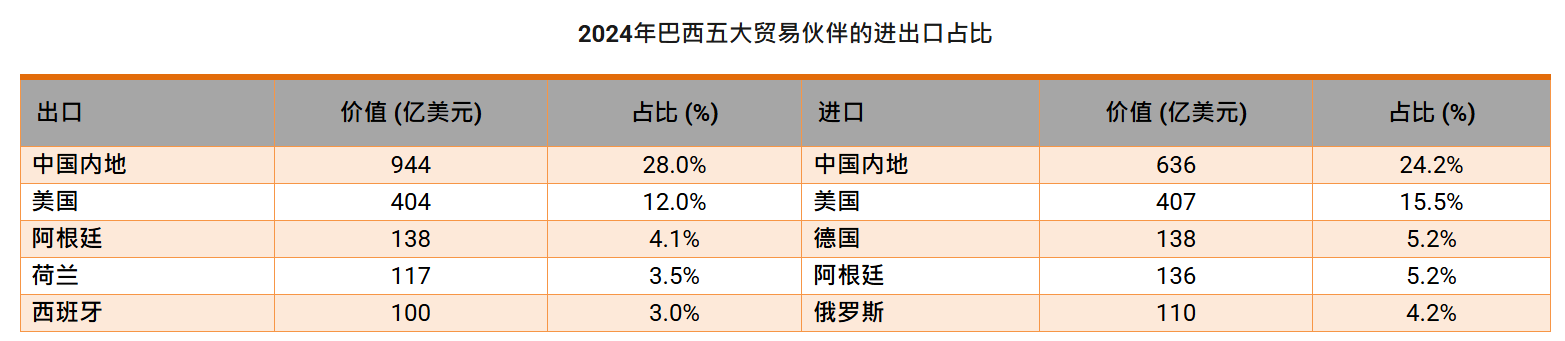
Another Latin American country, Mexico, is heavily reliant on the U.S. economically and trade-wise, whereas Brazil's trade partnerships are more diversified. In 2024, Brazil exported 42.8% ($144.3 billion) of its goods to Asian countries, while imports from Asia accounted for 28.7% ($96.6 billion) of its total imports. Among all of Brazil's trade partners, mainland China ranked first in both exports (28.0%) and imports (24.2%), followed by the U.S. Brazil also maintains frequent trade with European countries such as Germany and the Netherlands, while connecting its Latin American neighbors to the world.
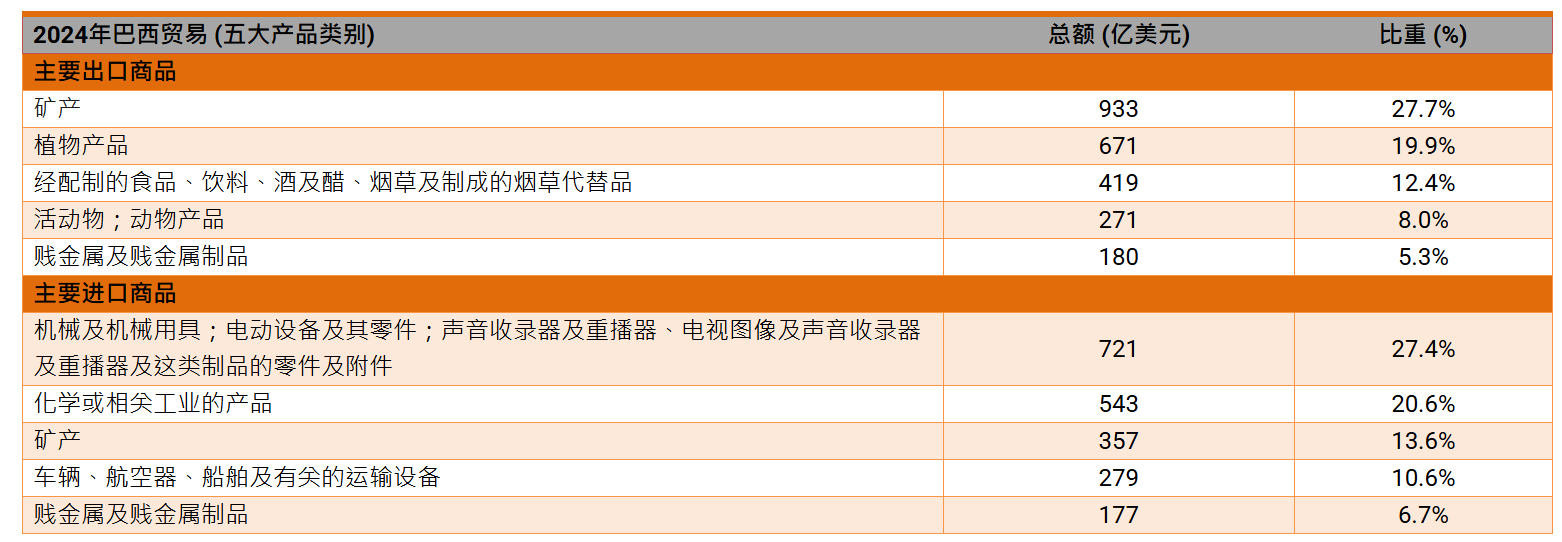
Brazil is rich in natural resources, with vast fertile land suitable for farming and grazing, as well as abundant reserves of minerals such as iron ore, bauxite, gold, and niobium. Minerals constitute a significant portion of Brazil's exports, accounting for 27.7% ($93.3 billion) of total exports in 2024, followed by plant products (19.9%). Brazil positions itself as a global agricultural powerhouse, exporting a wide variety of agricultural products to international markets.
On the import side, industrial products dominate, with machinery and mechanical appliances, electrical equipment, and their parts accounting for 27.4% ($72.1 billion), followed by chemical or related industrial products (20.6%).
Looking ahead, geopolitical tensions and trade frictions remain uncertain, but Brazil's open foreign policy stance makes it a reliable trade partner for governments worldwide.
Strategic Location of the Port of Santos
The Port of Santos is Brazil's largest and busiest port, handling approximately 28% of the country's foreign trade. Its strategic location, connected to an extensive and dense network of highways and railways, makes it a vital channel for Brazil's agricultural and industrial trade.
Located just 70 kilometers from São Paulo, the Port of Santos has long been a strategic cornerstone of Brazil's national logistics chain. The nearby central and southeastern regions, including the states of São Paulo (where the port is located), Rio de Janeiro, Minas Gerais, Mato Grosso, the Federal District (home to the capital Brasília), and Goiás, are hubs for agriculture, industry, commerce, finance, and consumption, further highlighting the port's importance.
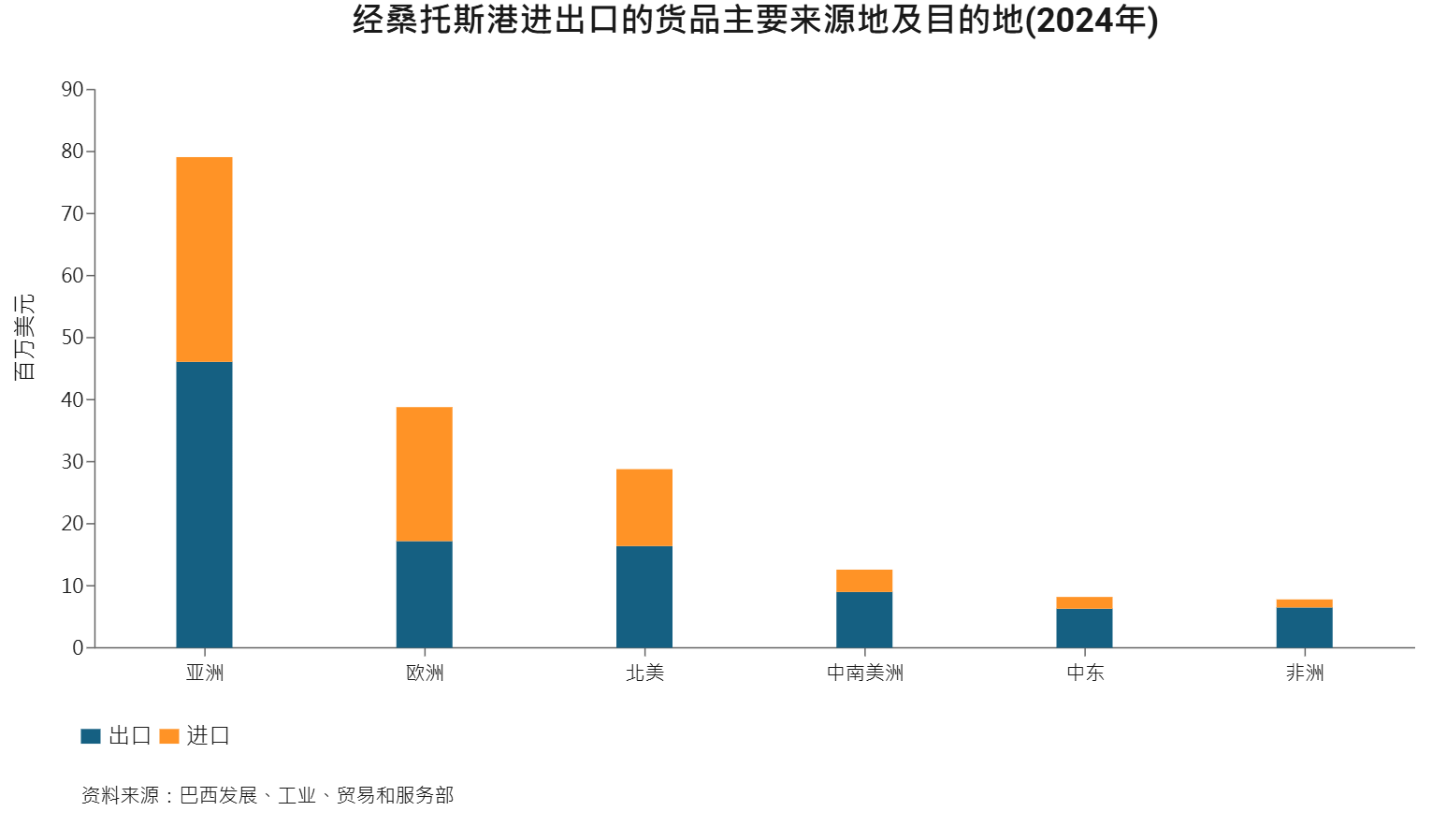
The Port of Santos handles Brazil's imports and exports, primarily with Asia. In 2024, the port processed approximately $46 billion in exports to Asia and $33 billion in imports from Asia. Europe ranked second, but the total trade volume through the port was only half that of Asia.
In 2024, the Port of Santos handled over 179.8 million metric tons of imported goods (a 3.8% increase from 2023) and 5.4 million TEUs (a 14.7% increase). More than half of the exports through the port were dry bulk, primarily soybeans and sugar. According to data from Brazil's Ministry of Development, Industry, Trade, and Services, various Brazilian products, including cotton (about 96%), coffee beans (76%), and sugar (72%), are shipped abroad via the Port of Santos. On the other hand, the port mainly imports general cargo, with automobiles and parts accounting for a significant share.
Expanding New Projects to Boost Logistics Capacity
Compared to other Latin American countries, Brazil receives more international attention, necessitating improvements to its logistics infrastructure. Given the Port of Santos' critical role in Brazil's economic and trade development, the port has been actively investing in hardware and software upgrades to enhance logistics capacity and efficiency.
Under the 2020-2040 Zoning Development Plan, Brazil has set a goal to double the Port of Santos' throughput from 97.2 million metric tons to 240 million metric tons by 2040, while adding smart transportation systems, deeper-water channels, and optimized truck storage facilities. The development plan is divided into phases, with the construction of a new dedicated agricultural terminal (STS11) between 2023 and 2026, increasing cargo handling capacity from 3 million metric tons to 14 million metric tons.
According to the zoning development plan, the focus in the coming years will be on developing the Tecon Santos 10 (STS10) container terminal. The project will be tendered between October and November 2025. The STS10 terminal will feature four new berths, increasing container throughput by 50%, from 6 million TEUs annually to 9 million TEUs.
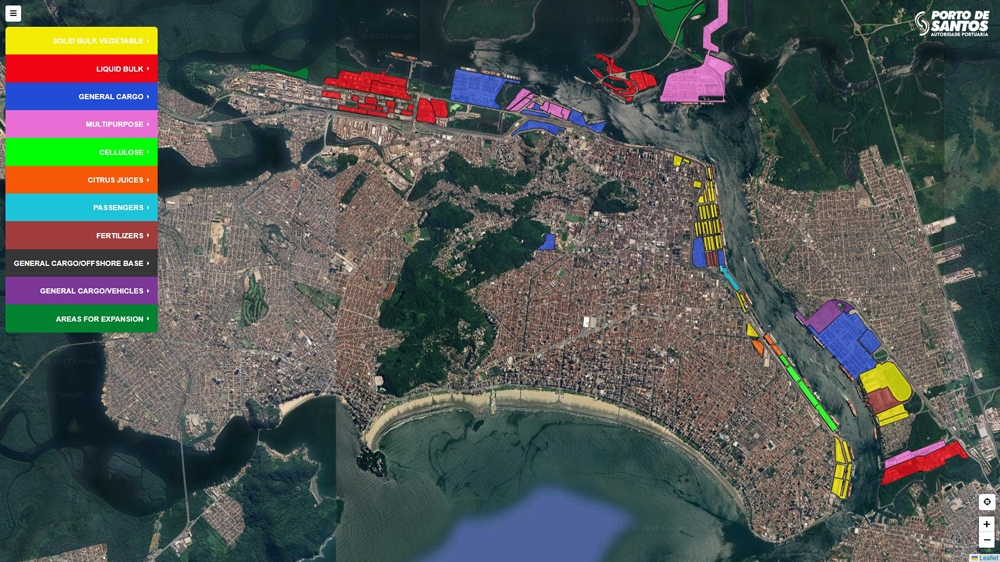
Brazil plans to double the Port of Santos' throughput to 240 million metric tons by 2040. (Image source: Port of Santos Authority)
Driving Technological Innovation at the Port
In addition to upgrading and expanding the Port of Santos' infrastructure, another key focus is driving technological innovation to improve efficiency and productivity. In 2021, the Port of Santos Authority launched the "Nape da Inovação" strategic plan, aiming to integrate academia, port terminals, research institutions, and government forces to advance port operations and logistics technology. The plan seeks to foster innovation to enhance the port's competitiveness in real-time cargo tracking, automation, sustainability, security, and energy efficiency.
Unlike incubators and accelerator programs, Nape da Inovação provides technical support rather than financial assistance to startups. For example, participating companies gain access to port data and information, such as real-time berth availability, vessel movements, weather conditions, and terminal operations, as well as technical expertise and promotional opportunities. Through this initiative, the Port of Santos not only facilitates agreements and collaborations between startups and other port stakeholders but also serves as a sandbox for startups to refine their innovative solutions before commercial application.
Nape da Inovação has helped nurture a group of startups expanding their businesses beyond Brazil. One notable example is the Brazilian weather forecasting startup i4sea, which successfully partnered with the Port of Rotterdam in the Netherlands. Specializing in maritime smart technology, i4sea's advanced data-driven solutions optimize port operations and maritime logistics. In 2022, i4sea signed a technical cooperation agreement with the Port of Santos to develop its assessment tool, i4cast. [5] i4cast provides weather and sea condition forecasts for up to 90 days, aiding ports in precise planning for vessel arrivals, departures, and berth allocation. i4sea later introduced the i4cast platform to other Brazilian ports and even the Port of Rotterdam in the Netherlands. Nape da Inovação is not limited to Brazilian startups; it also welcomes overseas startups.
Leveraging the BRICS Network
As international geopolitics grow increasingly complex, with tense trade relations and volatile situations, Brazil has emerged as a stable and reliable trade ally. Brazil's unique advantage lies in its flexible and adaptable foreign policy, capable of coordinating with different political systems. The Port of Santos, Brazil's main port, has been committed to developing physical infrastructure and technological systems to enhance logistics capacity and efficiency, reduce bottlenecks, lower transportation costs, and promote international trade.
In 2024, mainland China and Brazil pledged to further strengthen economic ties and deepen cooperation across various fields, including trade, investment, finance, technology, sustainability, tourism, artificial intelligence, and healthcare. Additionally, to make bilateral industrial supply chains more stable and resilient, it is crucial for businesses in both regions to improve logistics efficiency. Notably, Brazil has been exporting soybeans, iron ore, premium beef, fruits, and coffee beans worldwide, including to mainland China, the world's second-largest market by population.
The strengthening economic ties between mainland China and Brazil open doors for Hong Kong to serve as a "super connector" facilitating trade between the two nations. With its extensive and diverse network, high-quality professional services, and international standing, Hong Kong can help integrate the Chinese and Brazilian markets. For example, in the logistics sector, a Hong Kong-based third-party logistics provider has had representatives stationed in Brazil since 2013, covering airport and port operations; another Hong Kong-headquartered courier company began operations in Brazil in 2019, expanding to 17 Brazilian cities by June 2025.
These examples illustrate that Brazil is a promising market for Hong Kong businesses to explore, with significant potential. Many Hong Kong companies are already venturing into Brazil's logistics services, providing a lower-risk avenue for other Hong Kong firms looking to enter the market. Looking ahead, as China-Brazil relations grow closer, Hong Kong can play an even more vital role in fostering economic and trade cooperation between Brazil and Asia, building a prosperous future together.
Research source: HKTDC Research