
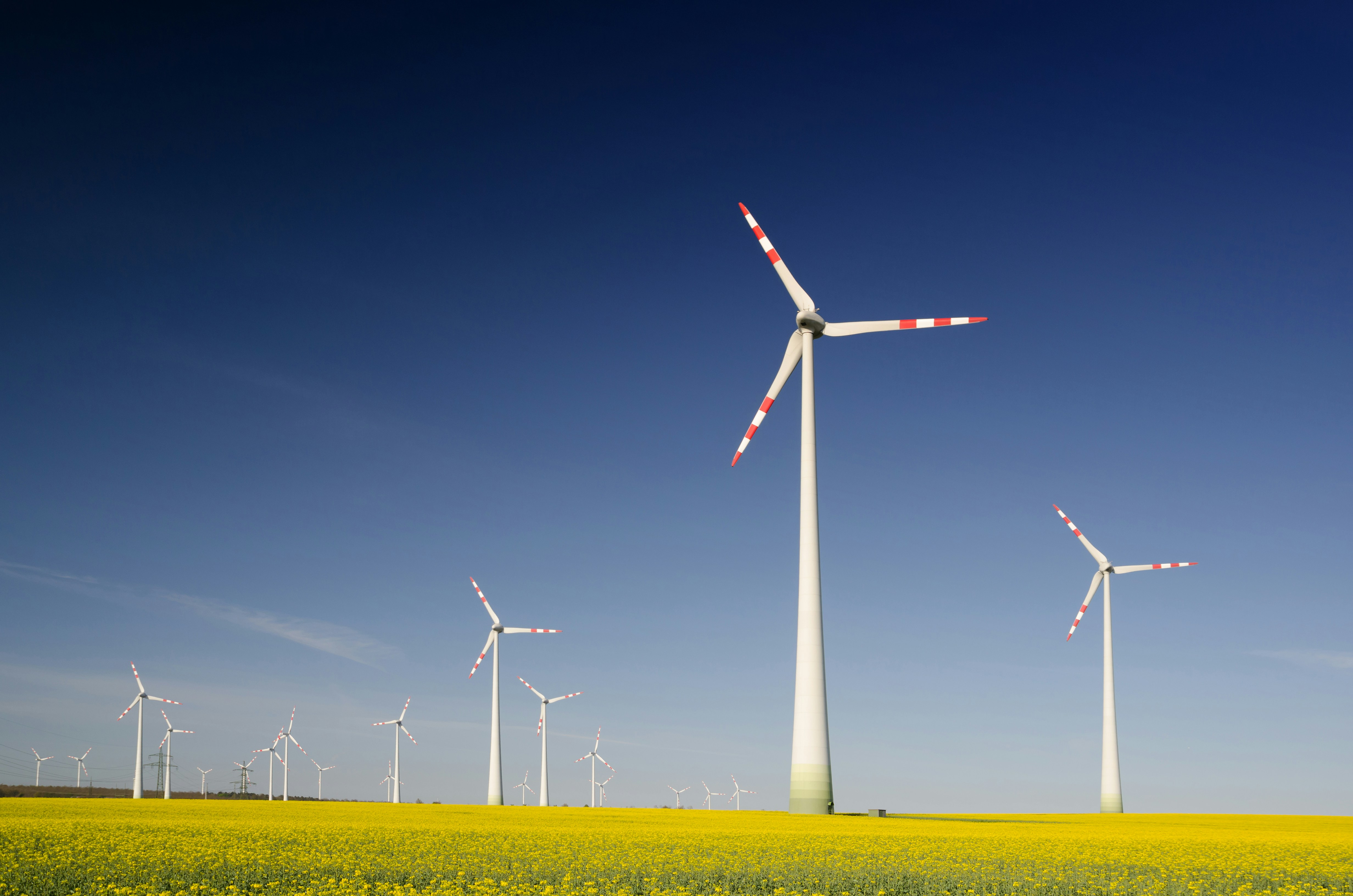
In 2024, China's new energy installed capacity exceeded 1.4 billion kilowatts, surpassing coal power to become the largest power source. Wind and solar power lead the world, accounting for 18% of electricity generation.
Recently, the State Grid Energy Research Institute released the "China New Energy Power Generation Analysis Report 2025," showing that by the end of 2024, China's cumulative installed capacity of new energy reached 1.41 billion kilowatts, a year-on-year increase of 33.9%, accounting for 42% of the country's total installed capacity, surpassing coal power to become the largest power source in the system. New energy power generation capacity has maintained rapid growth momentum and has completed the transition from incremental to stock-based.
Specifically, by the end of 2024, wind power installed capacity reached 520 million kilowatts, and solar power installed capacity reached 890 million kilowatts, ranking first in the world for 15 and 10 consecutive years, respectively, accounting for approximately 45.8% and 46.9% of the global total. New energy power generation added 360 million kilowatts of installed capacity, 1.2 times that of 2023, accounting for 83% of the country's total new power generation capacity, becoming the main source of new power generation.
New energy power generation has maintained a rapid growth trend, accounting for over 18% of total power generation, becoming the main source of incremental power generation. In 2024, China's new energy power generation reached 1.84 trillion kilowatt-hours, a year-on-year increase of 25%, contributing over 60% to the growth of power generation.
While installed capacity grows rapidly, the utilization of new energy continues to remain at a high level, maintaining above 95% for seven consecutive years. This is attributed to the continuous improvement of China's power system and electricity market.
To enhance the large-scale resource optimization and allocation capability of new energy, China has continued to strengthen the construction of new energy grid integration and transmission projects. Ye Xiaoning, deputy director of the New Energy Research Office at the State Grid Energy Research Institute, introduced that grid companies have concentrated on completing a batch of intra-provincial and inter-provincial transmission projects, including several key intra-provincial transmission projects to improve new energy consumption capacity. By the end of 2024, China had built 42 ultra-high voltage transmission channels, with a power grid that is not only large-scale and widely covered but also robust and reliable, injecting strong momentum into the country's energy transition and sustainable development.
The balancing and regulation capacity of the power system continues to improve. In 2024, China fully leveraged the role of supportive and regulatory resources, continuously promoted deep peak shaving of thermal power, improved energy storage utilization, tapped into demand-side regulation potential, and effectively enhanced the system's flexible regulation capability. The application of artificial intelligence technology in new energy power forecasting and extreme weather identification and early warning was deepened, continuously optimizing the primary frequency regulation and inertia response capability of new energy, effectively enhancing the active support capability of new energy. The role of the grid in optimizing resource allocation was fully utilized, implementing inter-provincial and inter-regional transmission, peak shaving mutual assistance, and backup sharing, promoting "full generation" of new energy, effectively addressing the difficulties of new energy consumption in local areas and concentrated periods.
The construction of the electricity market is also adapting to changes in the power structure. Ye Xiaoning stated that China is accelerating the construction of a unified national electricity market, further improving the electricity market mechanism to accommodate inter-provincial new energy consumption, strengthening the continuous operation of the medium- and long-term market, shortening trading cycles, increasing trading frequency, and enriching trading varieties. Emerging entities such as electrochemical energy storage, demand-side response, and virtual power plants have made new breakthroughs in market participation, fully leveraging the role of market mechanisms to serve power supply security and transition. In 2024, the market-based trading volume of new energy reached 956.9 billion kilowatt-hours, accounting for 52.3% of new energy power generation. Among them, the market-based trading volume of new energy in the State Grid's operating area reached 769.9 billion kilowatt-hours, a year-on-year increase of 36.6%.
At the same time, the scale of green power and green certificate trading has further expanded. In 2024, the state introduced several policies related to the green power market, expanding the application scenarios of green power certificates and proposing requirements for orderly green certificate applications and encouraging green power consumption. The country completed 446 million green certificate transactions, a year-on-year increase of 364%. Among them, 277 million were standalone green certificate transactions, and 169 million were green power trading certificates.
In the future, the scale of new energy development will continue to maintain rapid growth. The report proposes that, considering factors such as accelerated energy transition, full release of industry capacity, higher local development demands, and intensified international trade barriers, the scale of new energy development will continue to maintain rapid growth. It is estimated that the annual new installed capacity this year will range from 430 million to 500 million kilowatts. During the "15th Five-Year Plan" period, new energy will continue to maintain an average annual growth rate of 300 million kilowatts. Preliminary estimates suggest that by 2030, the installed capacity of new energy is expected to exceed 3 billion kilowatts, doubling the current scale. (Reporter Wang Yichen)
[SKIPPED]